
What are the Types of Foundation for a House?
Use these best foundation types for your home and see which one is perfect for your abode, tips for their construction, and more! Selecting the proper foundation type is important to the structural strength and durability of any home. But when you have so many different varieties of products out in the market, where do you go?
In this blog, we will help you understand the different types of foundations for a house and the role they play. Well, let’s take a closer look and assist you in choosing the correct footing for your dwelling!
How to Choose the Best Footing/Foundation Type for Your Home
The kind of foundation to use depends on several factors, such as the type of soil, the climate, and the cost and size of the house to be constructed. A good foundation is crucial to avoid such problems in the future as cracks, water damage, or overall failure of the structure. Here’s how you can make the best choice:
- Soil Type: The type of soil on your property plays a pivotal role in determining the types of foundation for a house. Clay, sandy, or rocky soils each have different needs.
- Climate Conditions: Some types of foundations may be affected by your local weather, such as rainfall and temperature changes.
- House Design: That is why it is essential to determine which type of foundation for a house corresponds to the weight, size, and layout of your home.
- Budget: Some foundation types are more expensive to install, so be sure to consider your financial limits.
- Local Building Codes: Check local regulations as some areas may restrict the use of certain types of foundation for a house.
See Also: What are the different types of cracks & their causes?
What’s the Importance of a House Foundation?
Why is it so important to lay such a solid foundation? The types of foundation for a house aren’t just about keeping the structure upright; they serve multiple purposes:
- Structural Support: The base makes certain your home does not fail; more precisely, it has a sound footing.
- Load Distribution: It means that it effectively distributes the load that is put on the ground by the super-structure, thereby avoiding the problem of racking.
- Protection from Moisture: It may seem that foundations keep water outside your house, protecting it against deterioration.
- Insulation: Proper foundation gives your home insulation that helps in keeping out the cold during the colder seasons.
- Resale Value: footings add value to your structure by lasting long, thus increasing the overall worth of your house and providing purchasers with assurance in its durability.
Different Types of Footings/Foundations for a House
When it comes to the types of foundations for a house, there are two main categories: shallow and deep foundations. Let’s take a look at each in more detail.
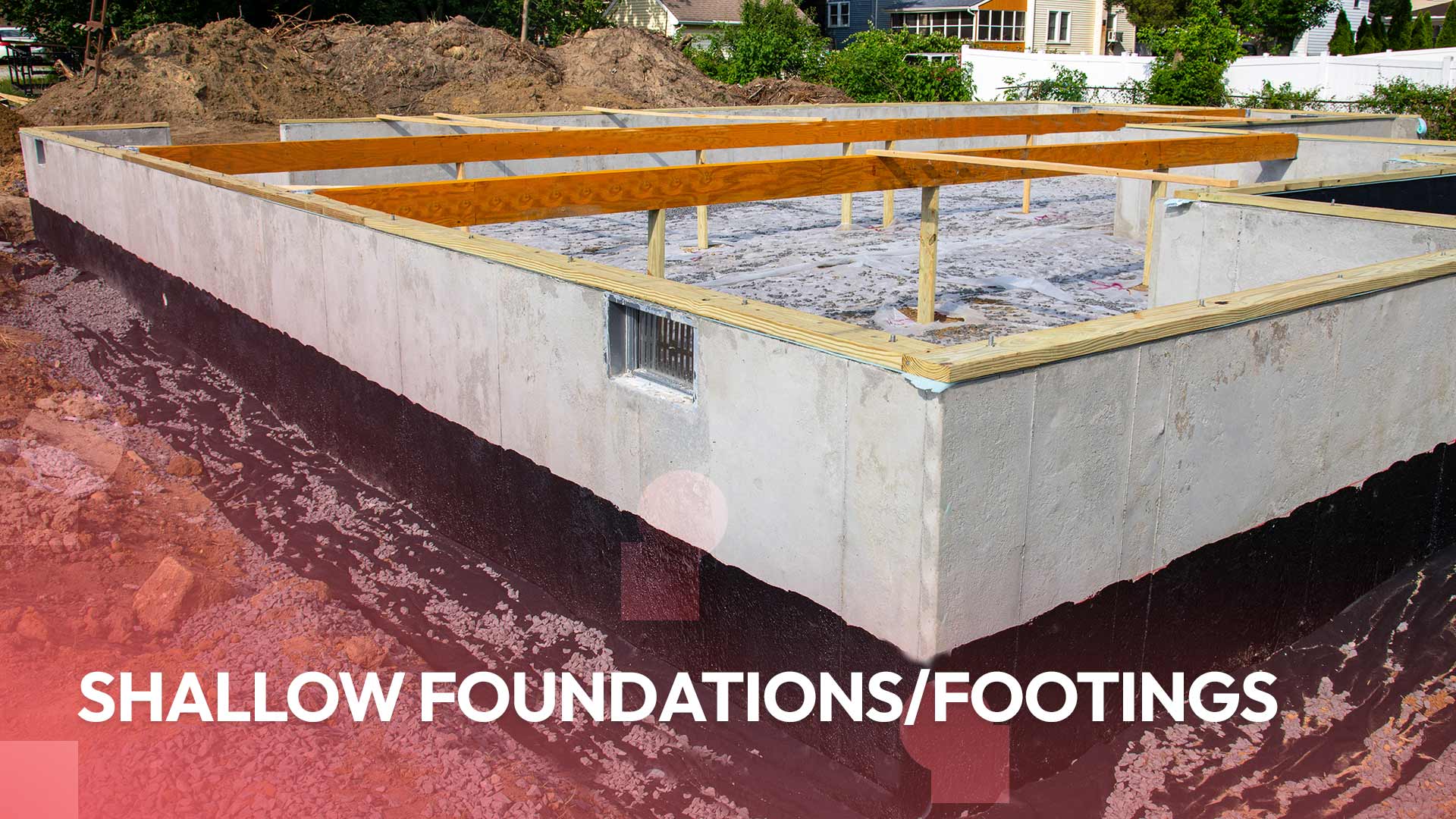
1. Shallow Foundations
One of the most widely used types of foundation for a house is the shallow foundation. They are embedded close to the ground level and are recommended for use in constructing little or light buildings.
These foundations perform well on calm ground, specifically in areas with a suitable bearing capacity. They are relatively cheap to build and can suitably be implemented in areas where future construction will be done on solid ground.
Unfortunately, when it comes to shallow foundations, there are several considerations to keep in mind. Shallow foundations are primarily used when the load of a building is evenly distributed, and the underlying soil can support the structure without requiring additional reinforcement.
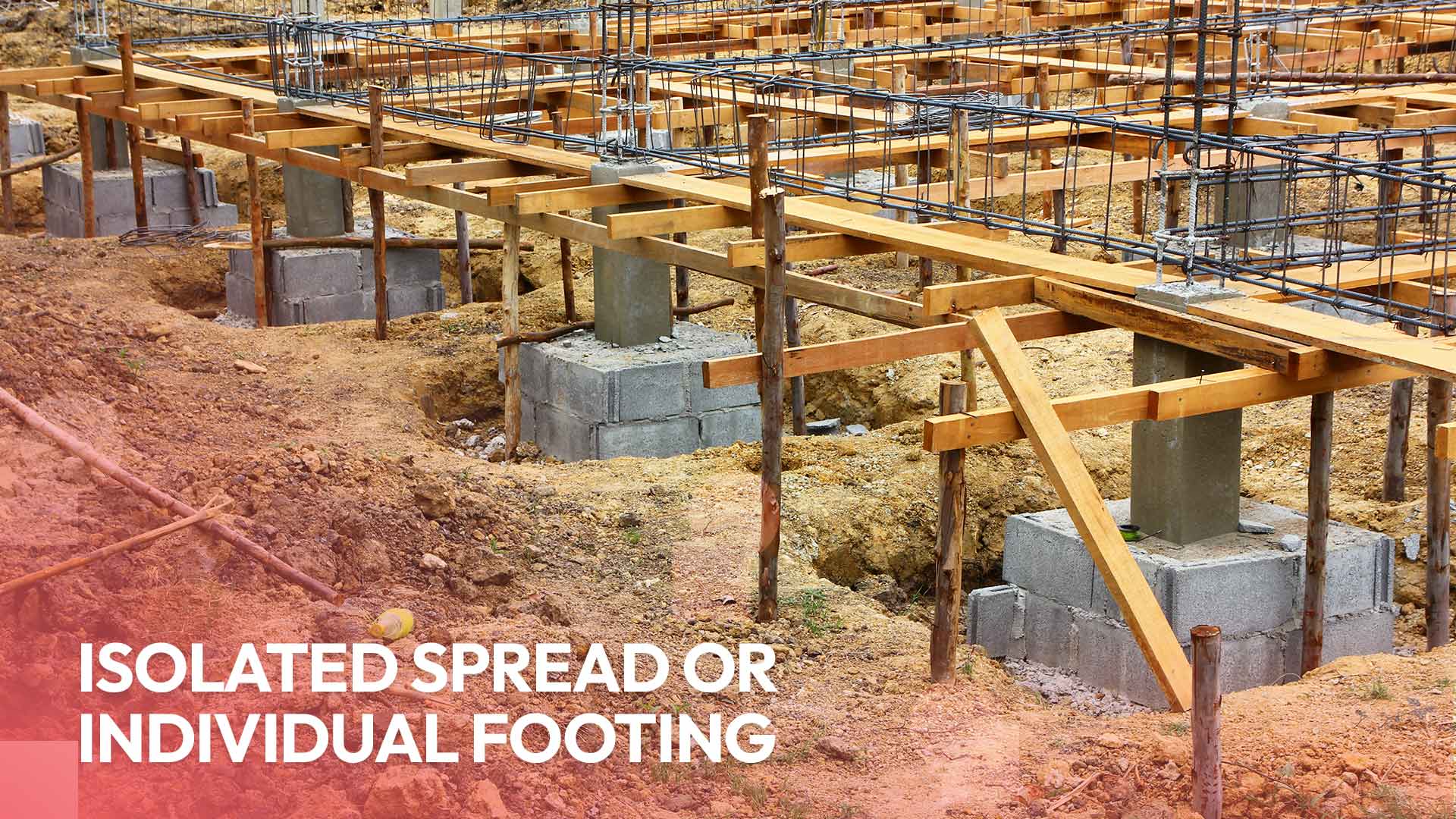
2. Isolated Spread or Individual Footing
While constructing a house, isolated spread footings or individual footings belong to the types of foundation for a house that may be popular. This kind of foundation offers local bearing for individual columns with a simple square or rectangle bottom to distribute the load over a greater ground area.
It’s useful where the spacing of the building’s columns is more, and it is required to reinforce each column separately. The footing of the structure is normally made of concrete, and it supports each column bearing an adequate load.
This kind of foundation is commonly used for home building since it provides stability in localities that have good earth stratum and little tendency to move or subside. Contact us for building construction in Bangalore today!
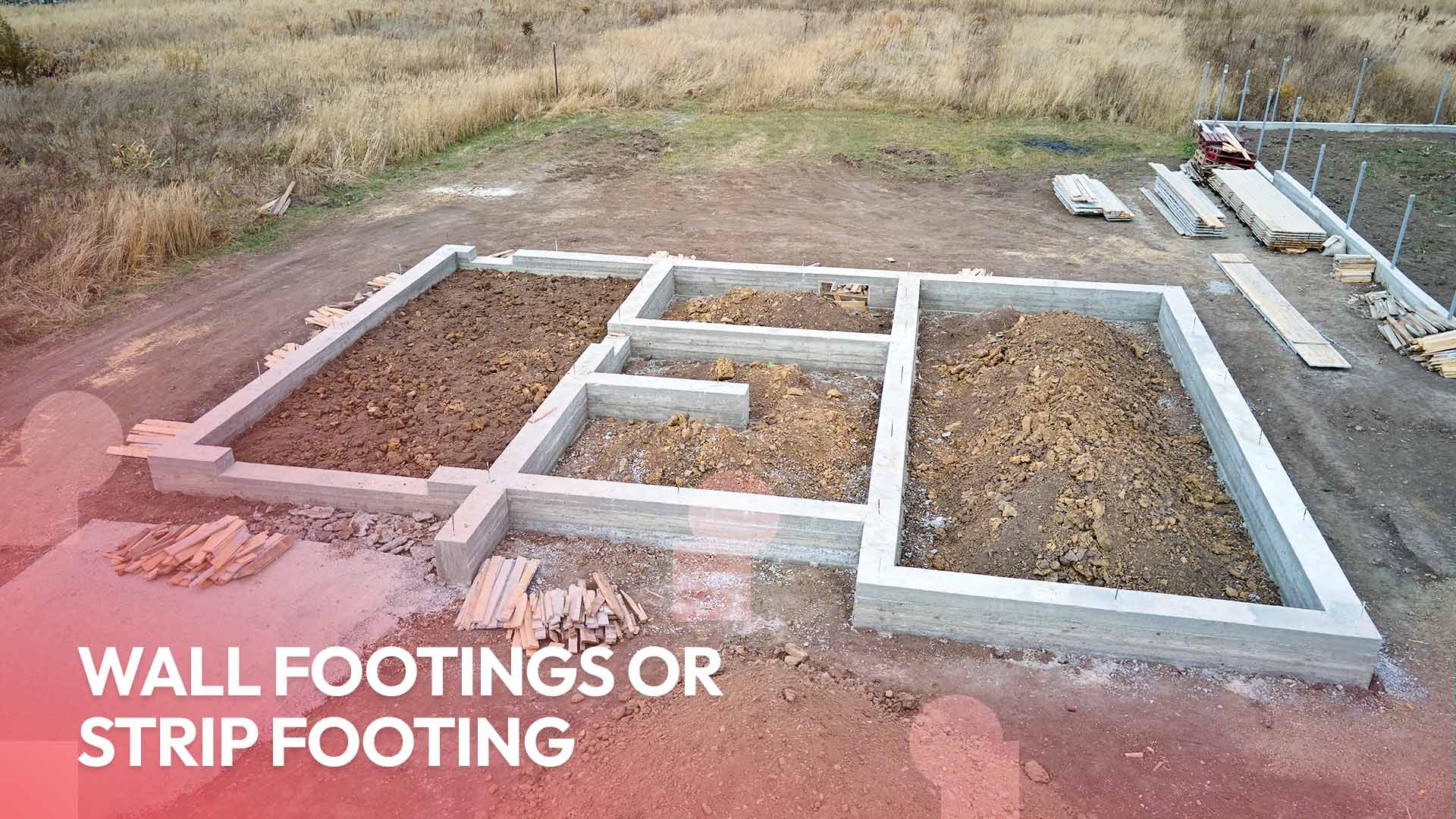
3. Wall Footings or Strip Footing
Wall footings, or strip footings, are among the options that are commonly selected among the types of foundations for a house. These foundations also run continuously beneath load-bearing walls, whereby the weight of the structure is distributed along the length of the wall.
They are most widely used in the construction of homeowners who have a brick or masonry structure and if the soil condition is strong and stable. Since the structures of most buildings are not flexible, strip footings eliminate uncontrolled specific pressure, which leads to the settlement of structures by offering uniform load distribution.
These foundations offer lesser costs and are a good solution given that houses need support along longer walls. Explore construction services at the best construction company in Bangalore!
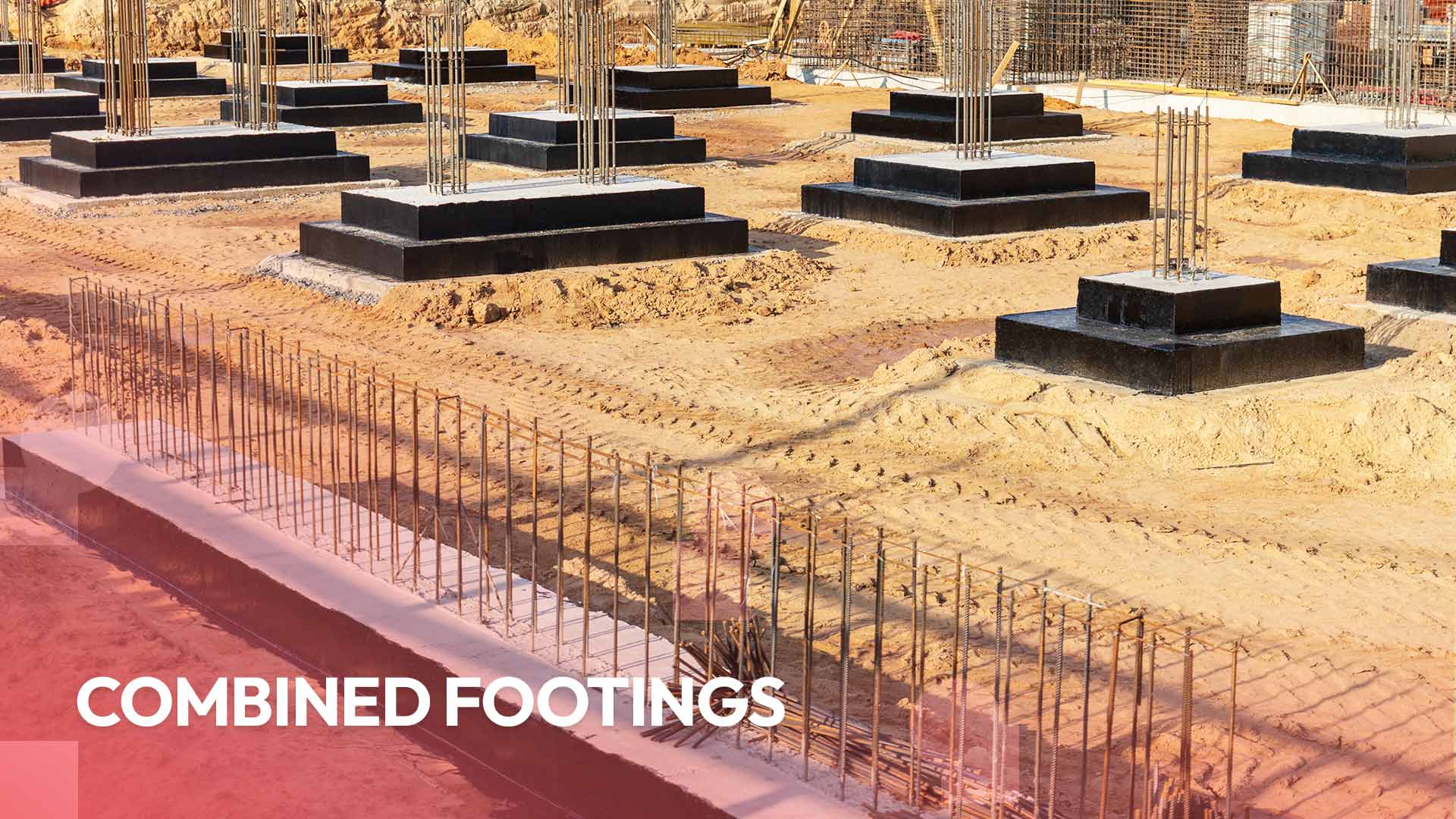
4. Combined Footings
Combined footings are an important option in the types of foundation for a house when two or more columns are close together, making isolated footings impractical. As is typical for such construction, the alignment of loads is compensated, and a single footing is provided to support both columns.
This type of foundation is especially beneficial for buildings situated in areas where space is scarce or columns are located very close to the property edges. Combined footings have the advantage of consolidating the support mechanisms of the columns into one, which helps in decreasing incidences of differential settlement and shakiness of the structure.
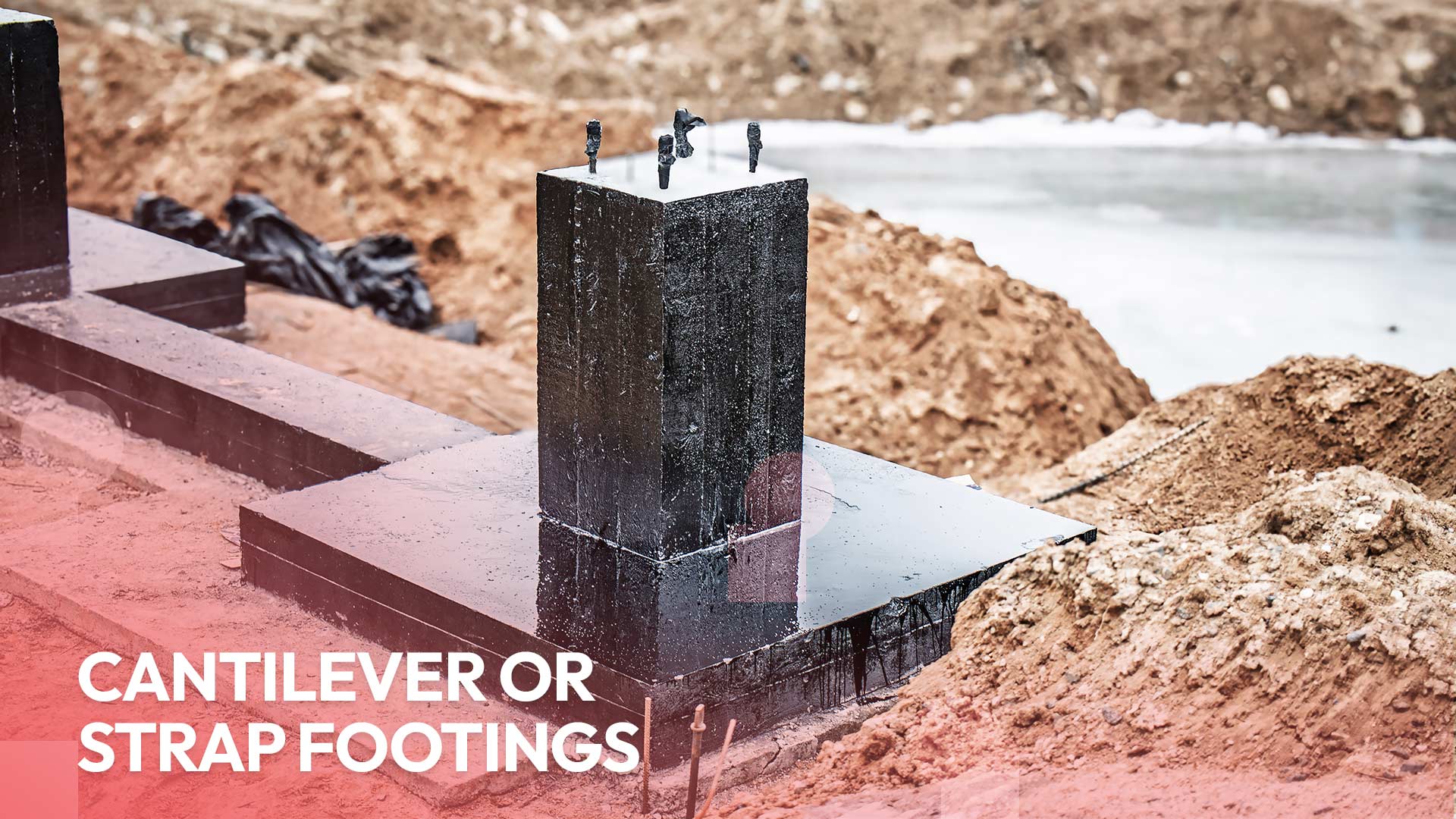
5. Cantilever or Strap Footings
Cantilever, or strap footings, are a kind of specialised type of foundation for a building; therefore, they are used very seldomly. These are used where a column is situated close to a property line and cannot be provided with isolated footing.
Instead, this column is built on a cantilever, or the’strapped foundation’ meaning that it is nailed to an interior column in the building. Such design enables the loads to be conveyed appropriately such that there is no infringement on any adjacent land.
Strap footings are especially useful in tightly built areas where conventional construction techniques cannot be used, and this provides a stable and balanced method where the neighbours are not threatened.
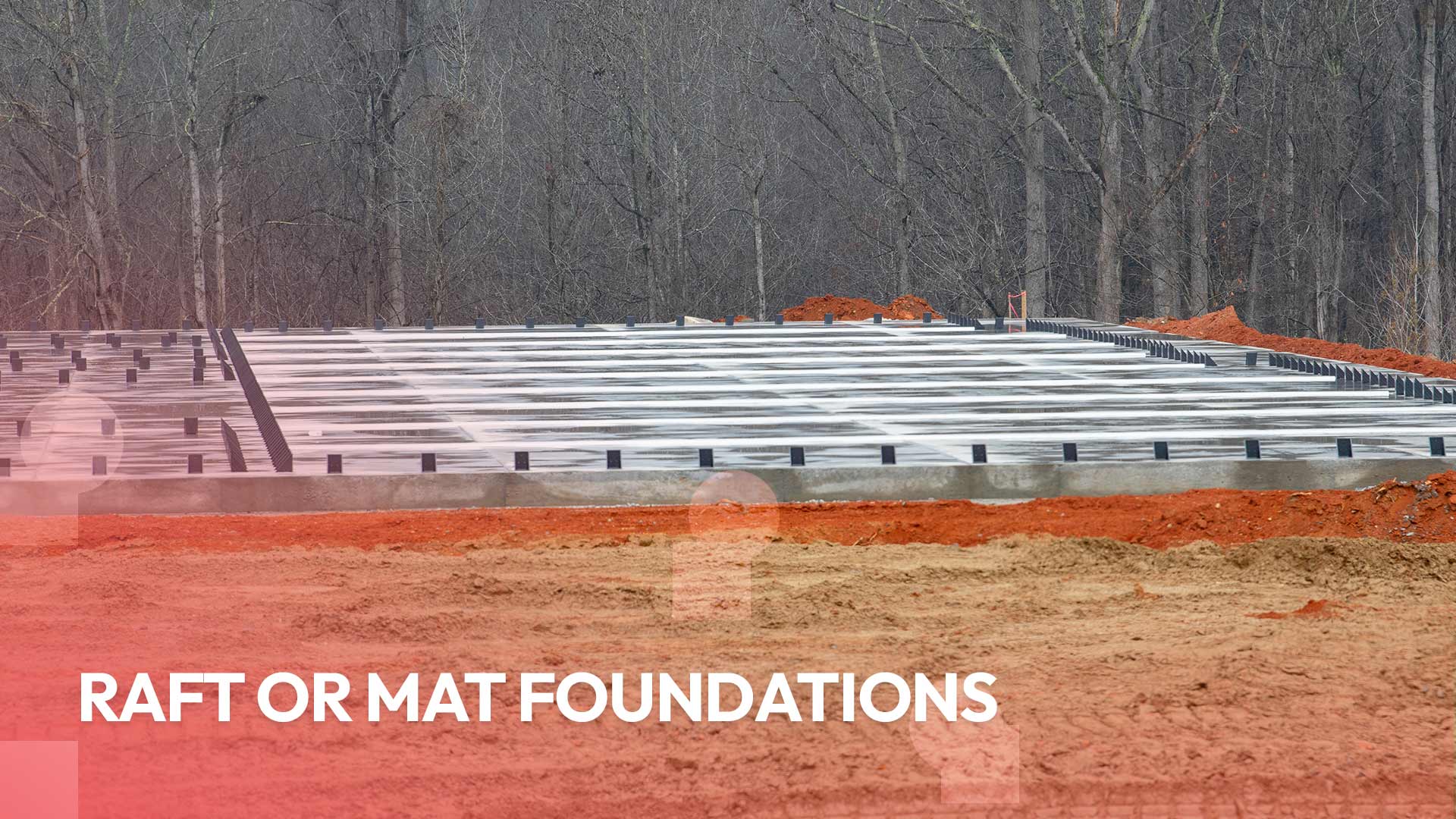
6. Raft or Mat Foundations
The raft or mat foundations are the most essential type of foundation for a building when the site has weak or expansive soils. In this foundation, the entire structure is founded by a sizable concrete slab where the load is spread out uniformly over the area.
Raft foundations are ideal for use where the soil can hardly bear the load or where a building has many closely distributed columns. It is a more effective solution to the problem of the foundation providing extra support for the structure in the area of unstable ground as well as preventing problems with sinking. This type of foundation is used in both residential and commercial construction.
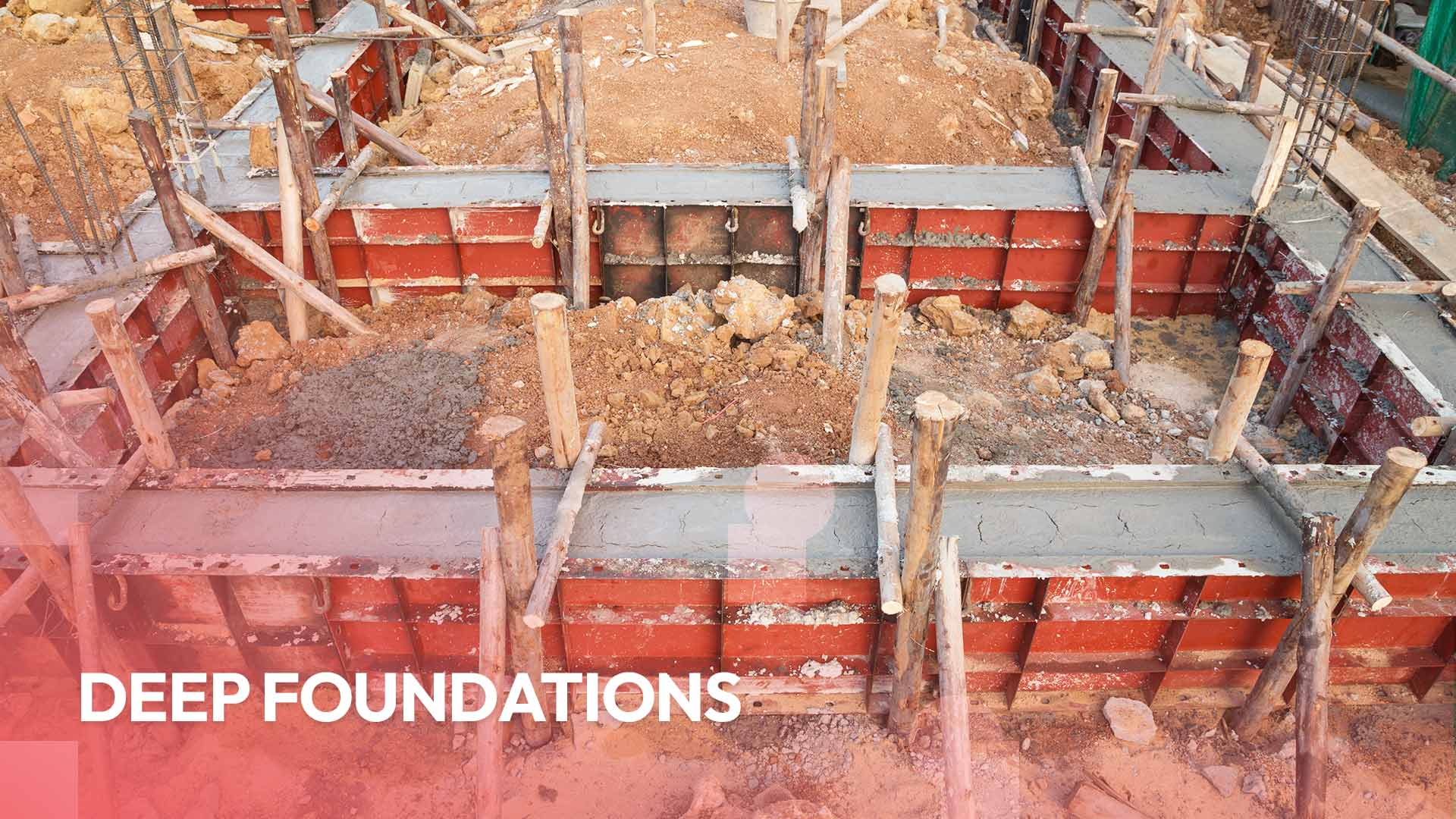
7. Deep Foundations
Deep foundations are one of the more complex types of foundations for a house. These foundations spread out from the building structure to the ground, bore up by stable soil or rock to bear the load of the structure.
They are used in areas where the surface soil is too weak to bear the structure’s weight. Large houses or structures, particularly those constructed in shaky areas, require deep foundations.
These foundations transfer the load down the earth, thereby minimising the chances of developing some problems like settling or shifting and thereby giving the structural setup its safety and reliability all through the required period.
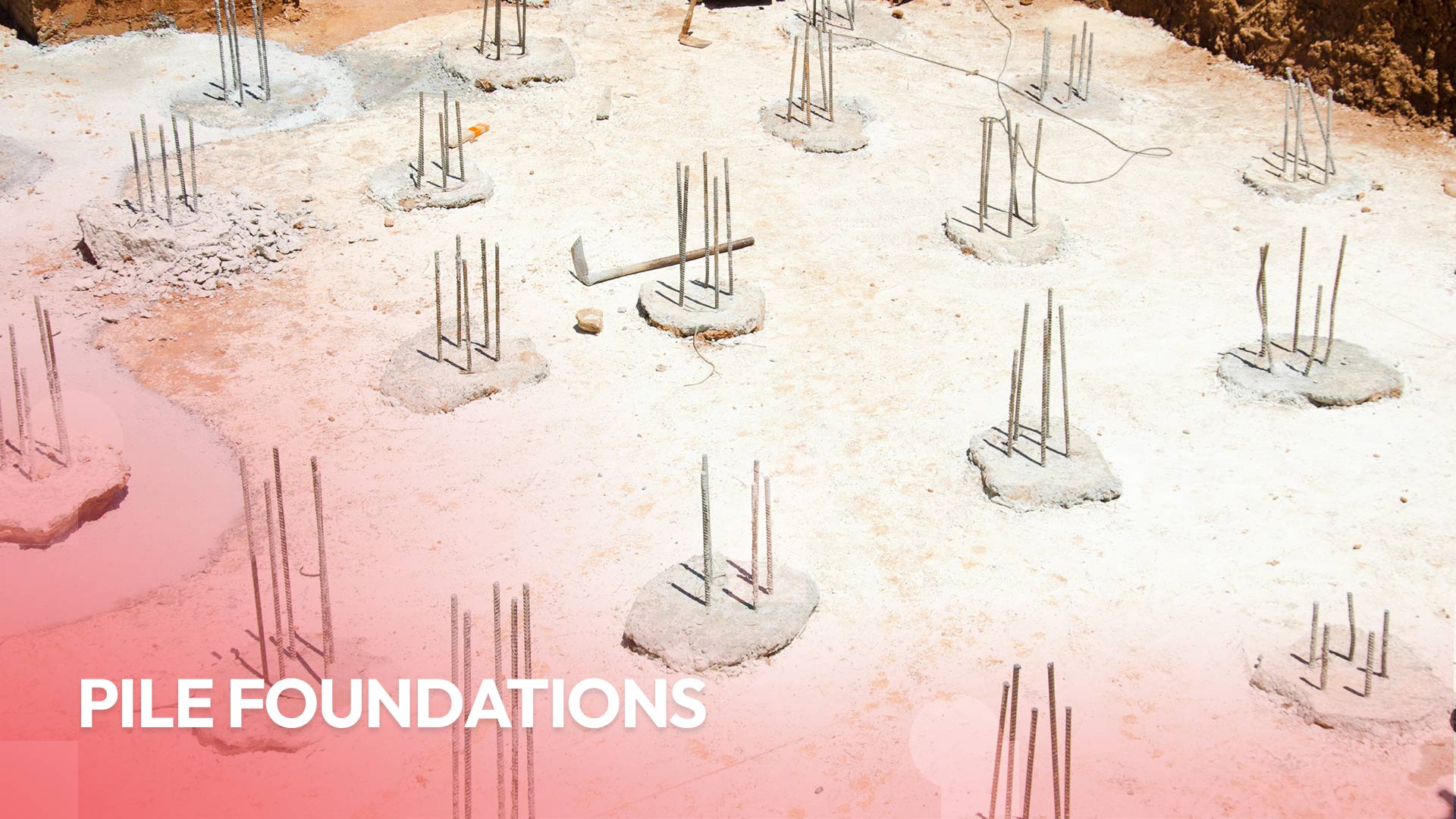
8. Pile Foundations
Pile foundations are a critical type of foundation for a house when building on soft, unstable, or waterlogged soils. This foundation requires the U-shaped piles to be hammered with long, cylindrical structures that are made up of steel, concrete, or timber to a stronger layer of soil than the structure is built on.
Well, to expand a bit more on the options, such as Pile foundations are normally employed in waterfront lots or homes situated on soft or sandy ground. They give the necessary bearing to carry heavy loads by passing through these soft surfaces to the solid base, thus making the structure remain intact no matter the kind of soil base on which it is built.
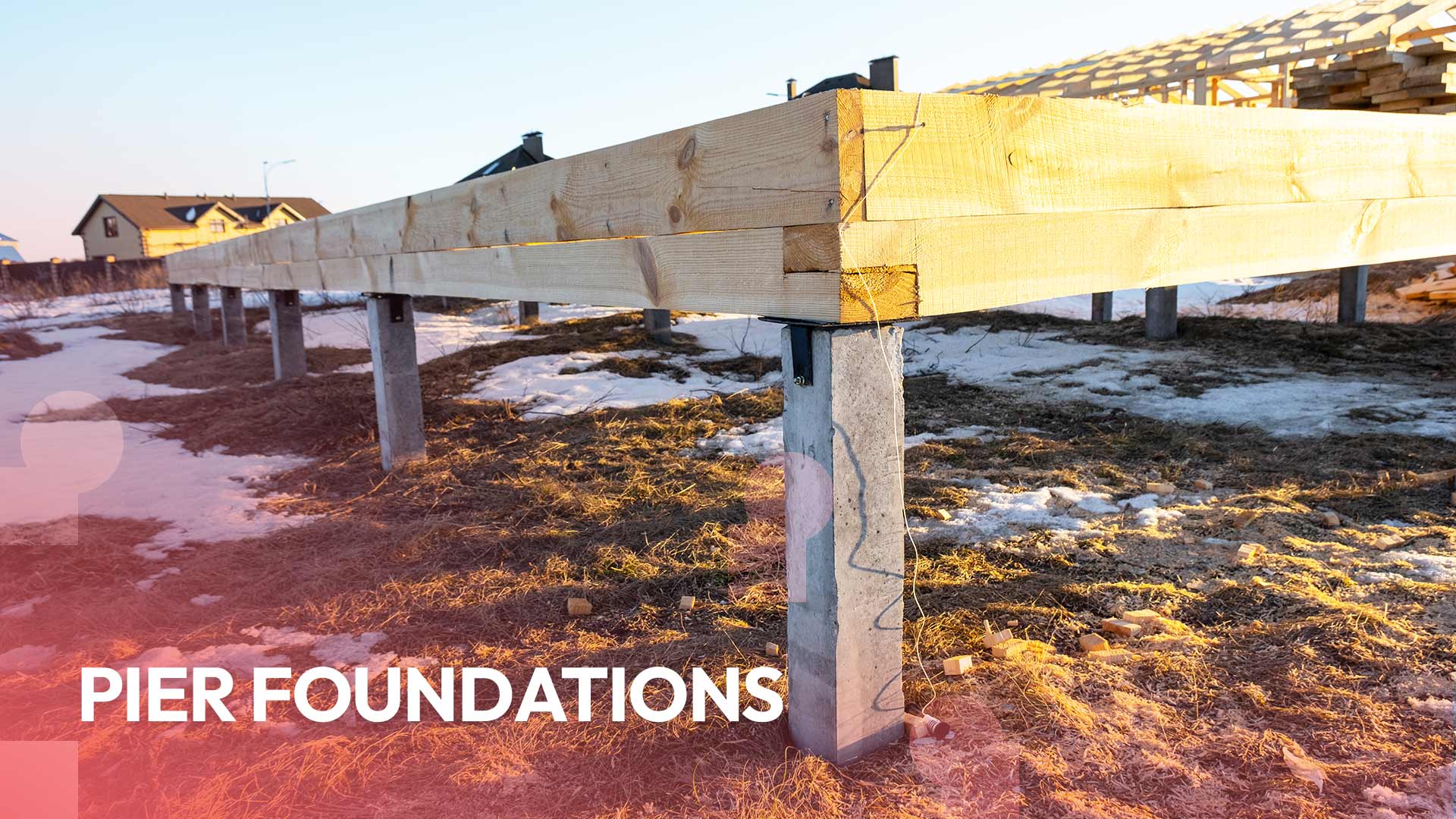
9. Pier Foundations
Pier foundations are a robust type of foundation for structures, often used in areas prone to flooding or where the ground is uneven. Piers are long and heavy against columns of concrete, bricks, or stones; they take the load to the ground level and transfer the burden to a hard-standing plane.
This sort of foundation suspends the structure above the ground, thereby preventing it from coming into contact with water and the consequent damage. A pier foundation is recommended for construction in areas that experience regular flooding or those built on slopes.
This type provides stable support and is relatively easy to manage; it is quite suitable for installation in high-raised houses in complex climatic conditions.
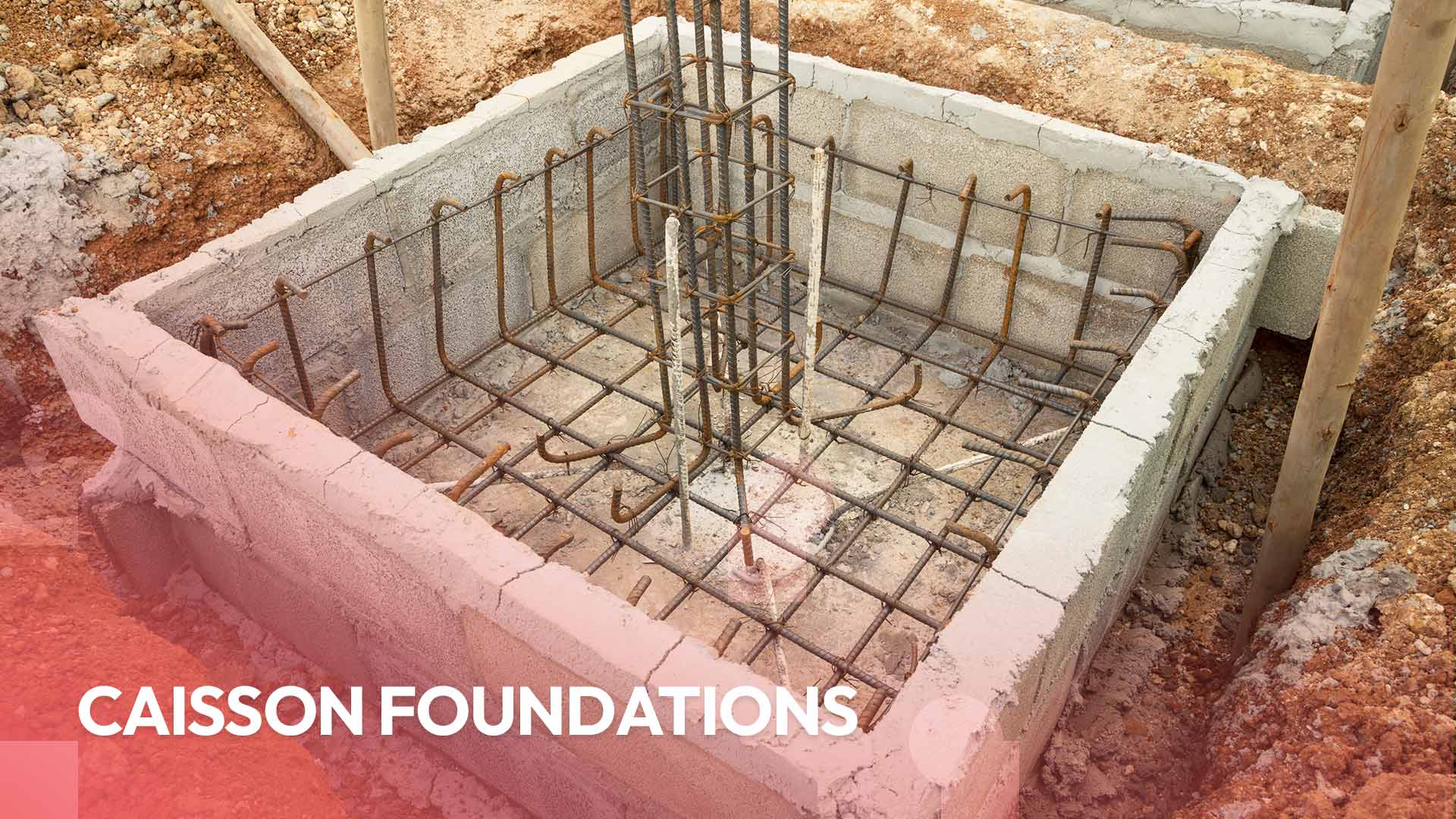
10. Caisson Foundations
Caisson foundations are a specialised type of foundation for a house, commonly used in underwater construction or on unstable soils. These are circular and airtight constructions that are embedded in the ground and then reinforced with concrete to provide a proper foundation for large or massive constructions.
Caisson bases are evident in the construction of bridges, piers, and homes that are close to water sources. They provide superior support in regions where standard foundations cannot be applied. Caisson foundations are an effective method of providing firmly established support where subterranean waters are variable or the soil is unreliable.

Why Choose TeamHome For Building Construction in Bangalore?
Choosing the right type of foundation for a building determines the service it will give in the future. The foundation that is set from the ground up is the basis of any house: big or small, ground floor or up high. Make sure that it reflects your choice correspondingly to the soil, climate, and design aspects of your project.
TeamHome, the best construction company in Bangalore, is here to build your DreamHome, making the uphill battle of construction easy. With our proficient professionals and commitment to quality, we ensure your home-building process is well-engineered, transparent, organised, cost-effective, and fail-safe. TeamHome, the best construction company in Bangalore, will make your dream come true by simplifying the home-building process from start to finish.
Key Takeaways
- The foundation is the backbone of a home, affecting its stability and durability.
- Soil type, climate, house design, budget, and local codes influence the best foundation type.
- Foundations provide structural support, distribute loads, protect from moisture, insulate, and increase resale value.
- Shallow foundations are suitable for smaller buildings on stable soil, while deep foundations are necessary for larger structures or unstable ground.
- Various foundation types include isolated spread footings, wall footings, combined footings, cantilever footings, raft foundations, pile foundations, pier foundations, and caisson foundations.
- Selecting the right foundation type is essential to prevent future problems like cracks, water damage, or structural failure.
See Also: Top 7 Construction Techniques for Earthquake-Resistant Buildings
Frequently Asked Questions (FAQs)
The best type of foundation for a house depends on the soil, climate, and building size. Shallow foundations like isolated spread footings work well for small homes in stable soils. For larger homes or unstable soils, deep foundations such as pile or caisson foundations offer superior support and stability, ensuring long-term structural integrity.
The better type of foundation for a house depends on the specific site conditions. Shallow foundations are more cost-effective for homes on stable ground, while deep foundations provide better support in areas with weak soils. Each type is designed to meet different structural needs, so choosing the right one depends on your home’s requirements and soil conditions.
The most commonly used type of foundation for a house is the shallow foundation, particularly isolated spread footings and strip footings. These foundations are widely used in residential construction due to their cost-effectiveness and ease of installation. They are ideal for small- to medium-sized homes in areas with stable soil conditions.
The best type of foundation for building addition is a pier foundation or an extended shallow foundation, depending on the existing structure. Pier foundations are ideal for uneven or sloped ground, providing stability while keeping the addition elevated. For level ground, extending the current foundation ensures seamless structural integration between the building and the new addition.